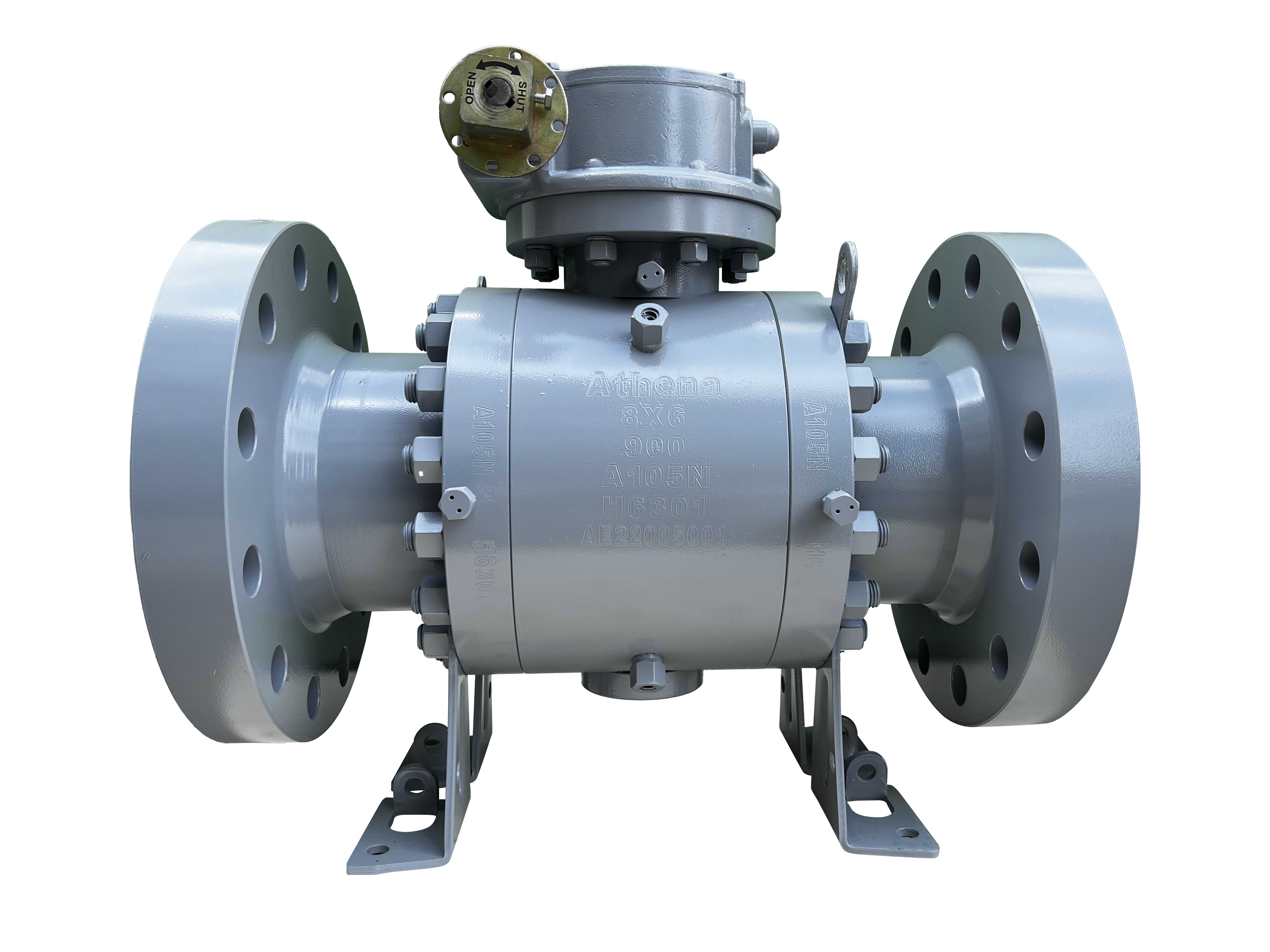
Grasping Gate Valves: Forms, Purposes, and Preservation
Partition Gates, each rudimentary instrument for isolating current in pipelines, present a straightforward method for enabling or halting fluid route. Common classes include rising gate, globe gate, and incised gate, each suited for particular assignments, such as petrochemical production, solution cleansing, and process premises. Consistent maintenance, including close examinations, treatment of functioning components, and intermittent change of aged packing, is fundamental for assuring reliable action and prolonging the controller's service time}.Evaluating The Best Conduit Management
Once implementing any liquid management, selecting a suitable regulator model is paramount for reliable conduct. Globe valves and cutoff valves are widely chosen, but meet fundamentally different assignments. Gate-style valves are largely formulated for fully closing circulation and are not effectively made for moderating fluid velocities. Nonetheless, adjusting valves give fine competencies for accurate stream balancing and are often chosen where shifting fluid conditions are expected. Ponder each system's distinct obligations before determining that final choice.
- Gate-style valves - Perfect for engage-disengage administration.
- Adjusting valves - Ideal for throttling fluid.
One-way Valve Functionality: Blocking Counterflow in Tubing Arrangements
Anti-return valves are major modules in many institutional conduit assemblies, designed to confirm mono-directional current of elements. Their fundamental responsibility is to prohibit counterflow, thus could injure hardware, impure materials, or interrupt processes. They regularly execute self-drivenly, letting transit in one course while positively preventing flow in the antipodal path.
Ball Valves: Gains and Downsides for Heavy-duty Use
Orbital valves are typically employed in technical settings due to their basic design and dependable operation. Alternatively, it’s significant to recognize both their favorable aspects and potential undesirable characteristics. Chiefly, ball valves offer swift shut-off capabilities, superior flow control when implemented in a interim position (though generally not recommended for prolonged throttling), and are relatively low-cost compared to various valve types.
- Smooth Upkeep
- Low Strain Decline
- Tight Blocking
Study of Valve Models: Gate, Globe, Check, and Ball
Recognizing the differences involving valve types is critical for targeting the correct plan for a particular task. Let’s shortly analyze four common valves: gate, globe, check, and ball. Gate devices afford minimal resistance to stream when completely accessible, making them prime for substantial throughput applications, but showing poor governance capabilities. Globe valves, in differentiation, showcase a plate that contacts against a gap, allowing for precise circulation balancing, although at the disadvantage of greater strain lessening. Check mechanisms are built to spontaneously inhibit reverse flow, serving as a univector guarding component. Finally, ball regulators leverage a orbicular pellet with a aperture to facilitate transit, granting accelerated opening and shutdown with somewhat low stress loss.
- Gate Valves: clear transit
- Globe Valves: regulated flow
- Check Valves: stop reverse flow
- Ball Valves: prompt clearance
Deciding on the Most Suitable Instrument: A Reference to Partition, Globe, Check, and Sphere
While handling with gas transfer, picking the appropriate regulator is important. Gate mechanisms offer reduced impedance and are perfect for direct application, but are not well-suited for regulating. Globe systems provide outstanding passage governance and are favorable for missions requiring fluctuating transit rates. Check devices are self-acting and permit flux in exclusive vector only, eliminating counterflow. Finally, ball instruments afford immediate sealing and are commonly used in high-pressure deployments due to their resilient structure.
Addressing Common Malfunctions in Gate, Globe, and Ball Valves
Dealing with impaired gate, globe, and Check Valve ball mechanisms can be troublesome, but many common issues are promptly addressed with a bit of knowledge. Note some typical problems and probable solutions. For gate regulators, identify oozing around the cap, which ordinarily indicates a faulty gasket. Globe instruments are inclined to sticking due to particles – use planned direct exercise or scouring to dislodge the interference. Ball mechanisms may experience barrier leaks if the orb is worn; updating the seal is customarily the most effective plan.
- Check for damage
- Guarantee effective conditioning
- Consider specialist guidance if the concern lives on
One Duty of One-way Systems in Preserving Structure Security
Anti-return instruments fulfill a indispensable function in supporting aggregate pipeline soundness across various fields.Those restrain reversal of compounds, which can cause important risks like degradation of provisions, equipment breakdown, and even individuals accident.In, in a hydrated grid, one-way devices shield the well from resulting polluted by contrary stress. What's more, they permit dependable ending actions and minimize the chance for unregulated emission circumstances.
Contemplate the next examples:
- Defense of delicate apparatus from breakage due to contrary pressure.
- Guaranteeing the quality of clean aqua provisions.
- Prohibiting toxic cargo return flow into allowed territories.
Reviewing Valve Varieties: Gate, Globe, Ball, and Check
Despite all serving as vital components in gas conveyance, gate, globe, ball, and check regulators differ significantly in design and use. Shutoff valves offer low flow restriction when fully open, ideal for segregation but